
Why Do Lips Become Dry and Chapped During Seasonal Changes? Causes and Lip Care Tips for Kids




Why School-Going Kids in India Get Frizzy Hair (And How to Tame It)
Kids Shampoo for Frizzy Hair: India Parent Guide
Frizzy hair is a familiar problem for many parents of school-going children in India. One morning your child's hair looks smooth and manageable; by the time they return from school, there may be flyaways, tangles and rough-looking ends.
That's not surprising. Children aged 5–12 spend their days moving between classrooms, playgrounds, school buses, sports sessions, swimming classes and outdoor activities. Add India's humidity, sweat, dust, hard-water exposure in many homes and frequent hair washing, and managing children's hair can become challenging.
Humidity is particularly relevant to frizz. Hair interacts with moisture in the surrounding air, and changes in humidity can affect how the hair fibre behaves and how frizzy it appears. That's why choosing the right kids shampoo for frizzy hair is only one part of the solution — the washing technique, detangling routine, hairstyles and everyday exposure all matter too.
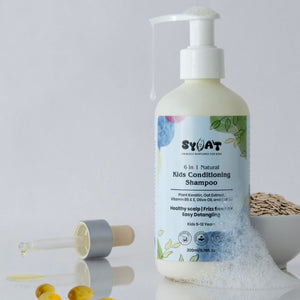
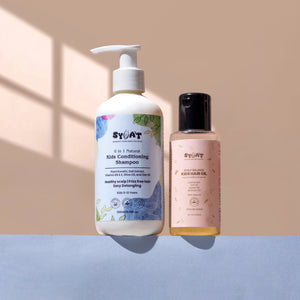
For school-aged children, Syoat Kids Conditioning Shampoo combines gentle cleansing with conditioning ingredients including Plant Keratin, Oat Extract and Vitamins B5 & E to help keep hair soft and manageable.
Quick Parent Takeaway
- Frizz can increase with humidity, friction, tangles, repeated washing and environmental exposure.
- Avoid harsh cleansing, rough towel drying and aggressive detangling.
- Use an age-appropriate conditioning shampoo and a gentle wash-and-comb routine.

🌡️ Why Active Kids Tend to Have Frizzy Hair
Frizz is not caused by one single thing. In school-going children, several everyday factors often work together.
1
India's Humidity Can Make Hair Harder to Manage
Hair interacts with moisture in the surrounding air. As humidity rises, hair can absorb more moisture from the environment, influencing how the hair fibre behaves — which helps explain why a smooth morning hairstyle may turn puffier by a humid afternoon, especially during monsoon months. The goal should be manageable, comfortable hair, not perfectly controlled hair all day.
2
Outdoor Play Means More Sweat, Dust and Frequent Washing
Running, sports, playground time and outdoor classes leave the scalp sweaty and the hair dusty. The problem begins when frequent washing is combined with a shampoo that leaves hair rough or difficult to detangle. A conditioning kids shampoo can help make the post-wash routine easier.
3
Hard Water Can Affect How Hair Feels
Hard water contains higher amounts of minerals such as calcium and magnesium, which can deposit on hair over time and may influence how it feels and behaves. If your child's hair consistently feels rough after washing despite a gentle routine, your home's water quality may be worth considering.
4
Swimming Adds Another Challenge
Repeated exposure to pool water can make the haircare routine more demanding. A practical habit is to rinse your child's hair thoroughly with fresh water after swimming rather than letting pool water remain on the hair for hours.
5
Rough Detangling Creates More Friction
When parents are rushing before school, it's tempting to pull a brush quickly through knots — but aggressive brushing creates more friction. Divide longer hair into sections, start at the ends and gradually work upward.
6
Sleeping, Towels and Everyday Friction Matter
Hair repeatedly rubs against pillows, towels and clothing throughout the day. Don't vigorously rub wet hair back and forth with a towel — gently press or pat away excess water using a soft towel or cotton T-shirt instead.
7
Very Tight Hairstyles Can Make Haircare Harder
Very tight ponytails or braids may make detangling harder later, particularly around the hairline and where elastic bands sit. Choose secure but comfortable hairstyles, and use hair ties that don't pull excessively.
🧴 How to Manage Frizzy Hair in Kids
The aim shouldn't be to completely eliminate every flyaway. Instead, build a routine that keeps the scalp clean and helps hair remain soft, comfortable and easier to detangle.
1
Choose a Mild Kids Shampoo for Frizzy Hair
No shampoo should be expected to permanently eliminate frizz — a better goal is one that cleans gently while improving conditioning and manageability. Syoat Kids Conditioning Shampoo contains Plant Keratin, Oat Extract and Vitamins B5 & E, and is sulfate-free, paraben-free, silicone-free, pH-balanced and dermatologist-tested.
2
Dilute Shampoo Before Applying It
Don't pour concentrated shampoo directly onto the scalp or hair. Take the required amount in your palm or a small cup, add a little water and lather gently before distributing it. Massage with fingertips rather than scratching with nails.
3
Don't Shampoo Simply Because Hair Looks Frizzy
Frizz doesn't necessarily mean the hair is dirty. Wash frequency should depend on sweat, outdoor activity, scalp oiliness, swimming, weather and hair type. Read our complete guide on how often kids should wash their hair.
4
Use Lukewarm Water
Very hot water is unnecessary for children's haircare. Use comfortable lukewarm water to wet and rinse the hair thoroughly, paying particular attention to the crown, back of the head and hairline.
5
Dry Without Rubbing
Avoid twisting the hair or aggressively rubbing it with a towel after washing. Press or pat instead — a small change that can make the next detangling step much easier.
6
Detangle from the Ends Upward
Pulling a comb from the roots straight through a large knot usually makes the process more uncomfortable. Start at the ends and work upward — a wide-tooth comb helps for longer or tangle-prone hair, and very curly hair may be easier to detangle in smaller sections.
7
Make Small Changes for Swimming and Outdoor Days
Encourage a properly fitting swim cap when practical, rinse hair with fresh water after swimming, and keep hairstyles comfortable and secure rather than excessively tight for outdoor school and sports days.
For children who regularly struggle with knots, follow our guide to detangling kids' hair without tears.

Why Choose Syoat Kids Conditioning Shampoo for a Frizz Routine?
Created specifically for the 5–12 age group rather than an adult shampoo repurposed for children — combines cleansing and conditioning in one gentle formula.
- ✅ Plant Keratin — conditioning & manageability
- ✅ Oat Extract — gentle haircare approach
- ✅ Vitamins B5 & E — conditioning formulation
- ✅ pH-balanced formula
- ✅ Sulfate-free
- ✅ Paraben-free
- ✅ Silicone-free
- ✅ Dermatologist-tested
Parents who want to review exactly what goes into the formula can check the Ingredient Transparency & Certifications page, or read our guide to Plant Keratin in kids shampoo.
❓ FAQs About Frizzy Hair in Kids
Why is my child's hair suddenly so frizzy?
Humidity, hair texture, friction, tangling, frequent washing, swimming and environmental exposure can all influence how hair looks and feels. If the change is sudden and accompanied by scalp irritation, unusual hair loss or another persistent concern, speak with an appropriate healthcare professional.
What is the best shampoo for kids with frizzy hair?
Look for an age-appropriate shampoo that combines gentle cleansing with conditioning. For children aged 5–12, features such as a pH-balanced formula, conditioning ingredients and a sulfate-free formulation may be useful when dryness, tangling and manageability are concerns.
Is Syoat Kids Shampoo suitable for frizzy hair?
Syoat Kids Conditioning Shampoo is formulated for children aged 5–12 with Plant Keratin, Oat Extract and Vitamins B5 & E. Its conditioning approach is designed to help keep hair soft and manageable, which can be useful for children whose hair is prone to frizz and tangling.
Which is the best shampoo for dry and frizzy hair for kids?
Instead of choosing based only on a "frizz control" label, look at the entire formulation. Choose a gentle children's shampoo that cleans effectively while providing conditioning support and avoiding unnecessarily harsh cleansing.
Should frizzy-haired kids shampoo every day?
Not automatically. Shampoo frequency should depend on scalp oiliness, sweating, sports, swimming, weather and the individual child's hair. Frizz alone is not a reason to wash the hair every day.
Is sulfate-free shampoo good for frizzy kids' hair?
A sulfate-free formulation can be a useful option for parents looking for a gentler cleansing routine, particularly when hair already feels dry or difficult to manage. However, the complete formulation matters more than any single ingredient claim.
Frizzy hair in school-going Indian kids is usually not about one bad habit or one missing product. Humidity, outdoor activity, hard water, swimming, friction, tangles and washing habits can all contribute to the way a child's hair looks and feels.
The most practical solution is a simple routine: cleanse when needed, dilute shampoo before application, avoid harsh scrubbing, rinse thoroughly, pat rather than rub, and detangle carefully from the ends upward. And when choosing a kids shampoo for frizzy hair, look for a product made for the child's age and everyday routine rather than simply reaching for an adult anti-frizz shampoo.
✨
Make Frizzy Hair Easier to Manage
Gentle cleansing + conditioning care for active kids aged 5–12.
Dermatologically Tested
Sulphate Free
Paraben Free
Silicone Free
pH-Balanced