




Baby Lotion vs. Kids Lotion: Is There a Difference?



Understanding Our Kids' Hair: How Their Hair Changes as They Grow
 Understanding Kids' Hair Science: How Their Hair Changes as They Grow
Baby-soft strands. School-day tangles. Pre-teen changes.
Your child's hair is constantly evolving as they grow — and so should the way you care for it.
The hair a baby is born with can be very different from the hair they have when they start school. By the pre-teen years, changes in hormones can influence the scalp and even the way the hair behaves.
But what exactly happens to children's hair as they grow?
- Why does baby hair feel so soft?
- Why does school-age hair tangle more easily?
- And why might a pre-teen suddenly have a much oilier scalp?
Let's understand the science behind kids' hair and how it changes through the different stages of childhood.
🌱 Baby Hair: Soft, Fine & Still Developing
A baby's first hair is often incredibly fine and soft.
Some babies are born with a full head of hair, while others have very little. Both can be perfectly normal.
During infancy, the hair is generally finer than mature hair, and the scalp is still developing. It is also common for babies to lose some of their early hair during the first few months. This happens because hair naturally moves through a growth cycle.
Why does baby hair feel so different?
The diameter of an individual hair strand can influence how thick, soft, or delicate it feels. Baby hair is often finer, which gives it that characteristic soft, wispy appearance.
At this stage, hair care is usually simple. There is less exposure to sweat, outdoor dust, pollution, swimming, and physical activity compared with older children. So babies generally don't need a complicated hair-care routine.
Gentle cleansing + minimal friction = simple baby hair care.
But as your little one grows, their hair — and their lifestyle — start changing.
🧸 Toddler Hair: Texture Starts to Reveal Itself
As children move beyond infancy, their hair gradually becomes more established. You may start noticing changes in:
Thickness Length Density Curl / wave pattern Texture Manageability
And genetics plays a major role in all of these. A child's hair might become straighter, curlier, thicker, or wavier as they grow.
But there is another major change happening too: they are becoming much more active. Running. Playing. Sweating. Exploring. Getting messy.
All that activity means more exposure to environmental factors — and more chances for the hair to become tangled.
🎒 School-Age Hair: When Hair Care Starts to Change
The school-going years, particularly around 5–12 years, are a fascinating stage of hair development.
By now, your child's hair is generally more developed than their baby hair. It may be longer, denser, and more exposed to everyday activities. Think about a typical school day:
School → playground → sports → sweat → dust → outdoor play → home.
School-age hair deals with sweat, dust and tangles that baby hair never had to.
That routine can make children's hair behave very differently from baby hair. Parents may start noticing:
- More frequent tangles
- Knots after sleeping
- Hair that's harder to comb
- Sweat on the scalp after playing
- Dry or rough-looking lengths
- Frizz and flyaways
- Hair becoming messy during the day
This doesn't necessarily mean something is wrong. It can simply mean that your child's hair has entered a new stage and needs a different kind of care.
For more on this transition, read our guide on Beyond Baby Shampoo: The India-Fit Haircare Routine for Kids 5–12.
🪮 Why Does Kids' Hair Get So Tangled?
If you've ever spent ten minutes negotiating with your child before combing their hair, you're definitely not alone. But there is some interesting science behind those knots.
The outermost layer of the hair shaft is called the cuticle. It consists of overlapping layers that help protect the inner structure of the hair. When individual strands rub against each other, friction occurs — and the longer the hair, the more opportunity there is for strands to interact.
Hair texture matters too.
Straight hair, wavy hair, and curly hair don't behave in exactly the same way. Curly and wavy hair can have more points of contact between strands, while dryness can make the hair feel rougher and increase friction. That combination can make tangling more likely.
This is why conditioning and gentle detangling become increasingly important during the school years.
For practical tips, explore our guide on How to Detangle Kids' Hair Without Tears.
💧 The Scalp Is Part of the Hair Story
When we talk about hair care, it's easy to focus only on the strands we can see. But healthy-looking hair begins at the scalp.
Every strand of hair grows from a structure called a hair follicle, which sits within the scalp. The scalp also contains sebaceous glands, which produce sebum — the natural oil that helps lubricate the skin and hair.
Every child's scalp is different.
Some children naturally have oilier scalps. Others may have drier-feeling hair. Activity level, climate, genetics, hair texture, and everyday habits can all influence how the scalp feels.
For children who spend hours running around outdoors, sweating is simply part of growing up. The answer isn't necessarily to wash their hair every single day. Instead, parents can observe their child's scalp and hair and choose a cleansing routine that matches their individual needs.
🔬 Hair Doesn't Grow All at Once
Here's another fascinating part of kids' hair science: hair doesn't continuously grow at the same speed. Every individual hair follicle moves through a natural growth cycle.
01
Anagen — The Growth Phase. This is the active growth stage. The hair is continuously produced by the follicle and grows longer.
02
Catagen — The Transition Phase. Growth slows down and the follicle begins transitioning into its resting stage.
03
Telogen — The Resting Phase. The hair rests before eventually shedding and making way for a new growth cycle.
This is why finding a few strands of hair on your child's pillow, comb, or clothing doesn't automatically mean there is a problem. Some shedding is simply part of the normal hair cycle.
However, sudden excessive hair loss, bald patches, persistent scalp irritation, or other unusual changes should be evaluated by a qualified healthcare professional.
🌸 Pre-Teen Hair: When Things Begin to Change Again
As children approach puberty, their hair and scalp can enter another important phase. Hormonal changes can influence the activity of the sebaceous glands, which produce the scalp's natural oils.
As these glands become more active, some pre-teens may notice that their scalp becomes oilier than it was during childhood. You may begin to notice changes such as:
Increased scalp oiliness Hair looking greasy sooner Changes in hair texture Increased scalp odour Different washing needs Changes in manageability
There is no universal age at which this happens.
Every child develops differently. Some children experience these changes earlier, while others experience them later. That is why hair care should evolve with the child rather than being dictated by a fixed age.
🥥 Where Does Hair Oil Fit In?
Hair oiling is deeply familiar to many Indian families. Beyond tradition, oils can have a practical role in hair care. Applying oil can help reduce friction between hair fibres and improve the smoothness and manageability of the hair.
For children with longer, dry, or easily tangled hair, a simple pre-wash hair-oiling routine can be incorporated into their hair care.

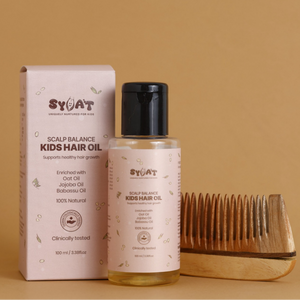
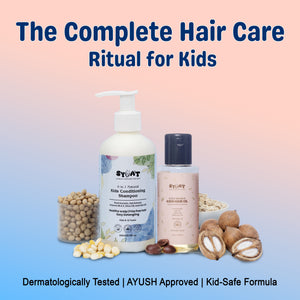
Syoat Kids Hair Oil
A blend of Oat, Babassu Oil and Jojoba Oil — designed for a simple pre-wash routine that smooths and softens.
Shop Now →
The idea isn't to create a complicated ritual. It's simply about understanding what your child's hair needs — and giving it thoughtful care.
🧴 Does Your Child Need Both Shampoo & Conditioner?
As children's hair becomes longer and more prone to tangling, conditioning can become increasingly useful. Shampoo primarily focuses on cleansing the scalp and hair. Conditioning, on the other hand, helps improve the feel, softness and manageability of the hair.
So, does a child aged 5–12 really need both? It depends on their hair type, length, dryness, tangling, and individual needs. We've explored this question in detail in our guide: Do Kids Aged 5–12 Really Need Both Shampoo & Conditioner?

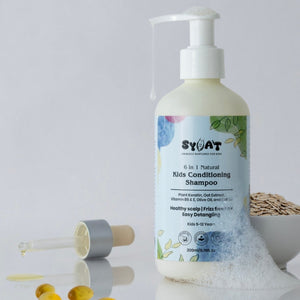
Syoat Kids 2-in-1 Shampoo & Conditioner
A pH-balanced formula with Oat Extract and Plant Keratin, combining cleansing and conditioning in one simple step.
Shop Now →
🌿 From Baby Hair to Pre-Teen Hair: What Changes?
Think of your child's hair as a journey rather than a fixed type.
| Stage | What You May Notice | What Hair Needs |
|---|---|---|
| 👶 Baby | Fine, soft, delicate hair | Gentle, simple care |
| 🧸 Toddler | Texture and density become more defined | Gentle cleansing + easy management |
| 🎒 School-age | Longer hair, sweat, dust, tangling | Cleansing + conditioning + gentle detangling |
| 🌸 Pre-teen | Hormonal changes and increased scalp oil | A routine adapted to changing scalp needs |
The key is not to follow the same routine throughout childhood. As their hair changes, their routine can change too.
💛 The Bottom Line: Their Hair Grows. Their Routine Should Too.
Children's hair is constantly changing. The fine hair of infancy gradually becomes more developed. The school years bring longer hair, more activity, more exposure to sweat and dust, and often more tangling.
Then, as children approach the pre-teen years, hormonal changes can begin influencing the scalp and its natural oil production.
Understanding these changes helps parents make better decisions about cleansing, conditioning, combing and hair oiling.
You don't need a shelf full of products. You simply need to understand what your child's hair is telling you.
Because kids' hair isn't just growing longer — it's growing with them. And the best hair-care routine is one that grows with them too.
Give their hair care that grows with them
Gentle, mineral-oil-free, sulphate-free formulas for every stage of childhood.
Frequently Asked Questions
Is baby hair different from kids' hair?
Yes. Baby hair is often finer and more delicate, while hair generally becomes more established in thickness, density, length and texture as children grow.
Why does my school-going child's hair get tangled so easily?
Longer hair, friction between strands, dryness, hair texture, sleeping and active play can all contribute to tangling.
Does children's hair become oilier before puberty?
It can. Hormonal changes approaching puberty may increase sebaceous gland activity and influence scalp oil production. The timing varies from child to child.
How often should I wash my child's hair?
There is no universal schedule. Consider your child's hair type, scalp, activity level, sweating, swimming and exposure to dust, and adjust the routine accordingly.
Is some hair shedding normal in children?
Yes. Hair naturally moves through growth and resting cycles, so some shedding is normal. However, sudden excessive shedding, bald patches, persistent scalp irritation or other unusual changes should be evaluated by a healthcare professional.
When should I change my child's hair-care routine?
Look for changes in hair length, texture, tangling, scalp oiliness, activity level and overall manageability. These changes can indicate that their routine needs to evolve.