


Baby Lotion vs. Kids Lotion: Is There a Difference?



Understanding Our Kids Skin Science
 Syoat Kids • Skincare Guide
Baby-soft skin. School-day sweat. Pre-teen changes.
Your child's skin may look soft and simple on the outside, but underneath, it is constantly developing.
The skin of a baby is not the same as the skin of a school-going child. And as children approach their pre-teen years, changes in the skin barrier, oil production, sweat, and environmental exposure can influence what their skin needs.
This is why kids' skin care shouldn't simply mean using smaller versions of adult skincare products.
Understanding how children's skin changes as they grow can help parents build a simple, age-appropriate routine around cleansing, hydration, and lip care.
Let's understand the science behind your child's skin at every stage.
👶 Baby Skin: Delicate, Developing & More Sensitive
A baby's skin is still developing after birth.
Compared with adult skin, infant skin can have a thinner outermost layer and may lose water more easily. The skin barrier — the protective system that helps keep moisture in and external irritants out — is still maturing.
This is one reason baby skin can feel exceptionally soft. It is also why baby skincare generally focuses on simplicity.
Gentle cleansing, avoiding unnecessary friction, and supporting the skin's natural moisture matter more than a long routine.
What is the skin barrier?
The outermost layer of the skin is called the stratum corneum. It acts as an important protective barrier. You can think of it like a tiny brick-and-mortar structure:
- Skin cells = bricks
- Lipids = mortar
Together, they help reduce water loss and protect the skin from external influences. When this barrier is functioning well, skin can retain moisture more effectively.
But as children grow, their skin begins to change.
🧸 Toddler Skin: More Movement, More Exposure
Toddlers are much more active than babies. They crawl, run, play, touch everything, spend time outdoors, and become exposed to more dust, sweat, and environmental factors.
Bathing therefore becomes more than simply keeping the skin clean. Parents need to find a balance between cleansing away sweat and dirt while maintaining the skin's natural moisture barrier.
Over-cleansing can leave skin feeling dry or tight, particularly when the cleansing routine is not suited to the child's skin. This is where choosing an appropriately formulated body wash for kids becomes important.
The objective isn't to remove every trace of oil — it's effective cleansing while respecting the skin's natural barrier.
🎒 School-Age Skin: Active Days, Sweat & Everyday Dirt
The school-going years — roughly ages 5 to 12 — bring another major change. Children become increasingly active. School. Sports. Playground time. Cycling. Running. Outdoor adventures.
All of this can mean more:
Sweat Dust Pollution exposure Frequent bathing Sun exposure Friction from clothing
 Sweat, sun and dust from active school days all add up on a child's skin.
Sweat itself is a normal and important function of the body — it helps regulate temperature. But after a long day of activity, sweat mixed with dirt and environmental buildup can leave the skin feeling less fresh.
This is why a regular kids skincare routine can become more relevant during the school years.
💧 Why Does Kids' Skin Sometimes Feel Dry After a Bath?
Have you ever noticed your child's skin feeling tight after bathing? There is some interesting skin science behind this.
The skin naturally contains water and lipids that help maintain its barrier. Cleansing removes dirt and sweat, but it can also remove some of the skin's surface oils.
The effect can be more noticeable when:
- Water is very hot
- Bathing is prolonged
- The skin is naturally dry
- Cleansing is too frequent
- The product is not well suited to the child's skin
This doesn't mean children should avoid bathing. It means how we cleanse matters.
A thoughtfully formulated kids body wash should cleanse effectively while being appropriate for children's everyday skin-care needs.

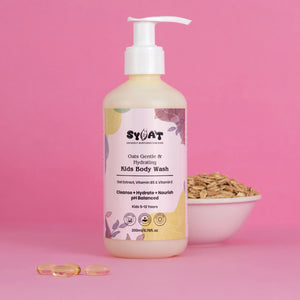
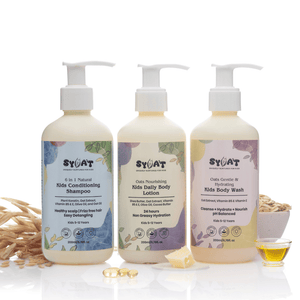
Syoat Kids Body Wash
A gentle, soap-free, pH-balanced formula that cleanses without stripping the skin's natural moisture.
Shop Now →
For more on this, read our guide on Soap vs. Body Wash: What's Best for Your Child's Skin Health?
⚖️ What Does pH Mean in Kids' Skin Care?
You may have seen the term pH balanced body wash on children's products. But what does pH actually mean?
pH describes how acidic or alkaline something is. Healthy skin has a naturally acidic surface environment, often referred to as the acid mantle. This environment plays a role in maintaining the skin barrier and supporting the skin's natural ecosystem.
That's why pH is one of the factors parents can consider when selecting a body wash for kids.
However, pH isn't the only factor that matters. The complete formulation, cleansing system, ingredients, and how the product feels on the child's skin all matter too.
🌿 Hydration: Why Does Kids' Skin Need Moisture?
Water is essential for healthy-looking skin. The skin barrier helps prevent excessive water loss from the surface. When the barrier isn't retaining moisture effectively, the skin can feel dry, rough, or uncomfortable.
This is where moisturising becomes an important part of kids' skin care.
A body lotion works by helping support the skin's moisture balance. Depending on the formulation, moisturisers can contain ingredients that attract water, soften the skin, or help reduce moisture loss.
When should you apply body lotion?
A simple approach is to apply kids body lotion after bathing, particularly when the skin is still slightly damp. This can help support the skin's moisture-retention process.
For children whose skin tends to feel dry, regular moisturising can become an easy everyday habit.

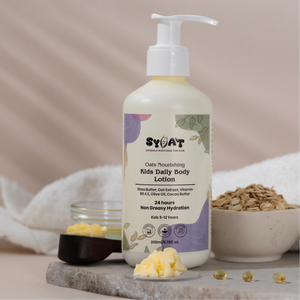
Syoat Kids Body Lotion
A fast-absorbing, non-greasy formula with Oats Extract, Shea Butter, Cocoa Butter and Vitamins B5 & E.
Shop Now →
Curious how it differs from baby lotion? Read Baby Lotion vs. Kids Lotion: Is There a Difference?
🌸 School-Age Skin vs Pre-Teen Skin
As children approach puberty, the skin can begin entering another stage. Hormonal changes can influence the activity of the sebaceous glands, which produce sebum — the skin's natural oil.
As these glands become more active, some pre-teens may notice changes such as:
Increased oiliness More noticeable sweat Changes in skin texture Increased body odour Different cleansing needs
Not every child experiences these changes at the same age — and not every pre-teen will have oily skin.
Genetics, hormones, climate, activity, and individual biology all influence how skin behaves. The important thing is to recognise that skin care needs can change as children grow.
👄 What Makes Children's Lips Different?
The lips deserve attention too — but they are not exactly the same as the skin on the rest of the body.
The lips have a much thinner protective barrier and contain fewer oil-producing glands than many other areas of the skin. That is one reason lips can become dry more easily.
Children may experience dry lips because of:
- Dry weather
- Wind
- Sun exposure
- Frequent lip licking
- Dehydration
- Habitual biting or picking
Why does licking dry lips make them feel worse?
It may seem natural to lick dry lips for temporary relief. But saliva evaporates quickly. Repeated lip licking can contribute to further dryness and irritation around the lips.
This is why a simple lip balm for kids can be useful when lips feel dry.

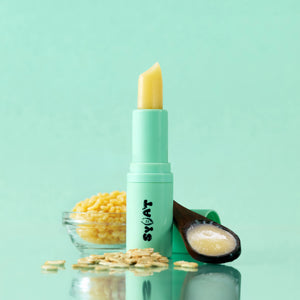
Syoat Kids Nourishing Lip Balm
Formulated with Cow Ghee and Oats, dermatologist tested and clinically tested, with no added colour.
Shop Now →
The aim is straightforward: help keep little lips feeling comfortable and moisturised.
🛁 Building a Simple Kids' Skin-Care Routine
Children don't need a complicated skincare shelf. A simple routine can focus on three basic steps:
01
Cleanse. Use an appropriately formulated kids body wash to remove sweat, dirt, and everyday buildup.
02
Moisturise. After bathing, use a kids body lotion to support skin hydration and help maintain a comfortable skin feel.
03
Care for the lips. When lips feel dry, a suitable kids lip balm can be used to provide moisturising care.
That's it. Cleanse. Hydrate. Nourish.
The routine can remain simple while changing according to the child's age, skin type, activity level, climate, and individual needs.
🌱 What Changes from Baby Skin to Pre-Teen Skin?
Think of childhood skin as a journey.
| Stage | What Changes | What Skin May Need |
|---|---|---|
| 👶 Baby | Developing skin barrier, delicate skin | Simple, gentle care |
| 🧸 Toddler | More movement and environmental exposure | Cleansing + moisture |
| 🎒 School-age | More sweat, outdoor activity and bathing | Cleansing + hydration |
| 🌸 Pre-teen | Hormonal changes can influence oil and sweat | Routine adapted to changing skin |
There is no single skincare routine that has to remain unchanged throughout childhood. Their skin grows and changes with them.
💛 The Bottom Line: Understand Their Skin Before You Care for It
Children's skin is constantly adapting. Baby skin is still developing its protective barrier. Toddler skin encounters a much more active environment. School-age children experience more sweat, outdoor exposure, dust, and frequent bathing.
And as children approach their pre-teen years, hormonal changes can begin influencing oil and sweat production.
Understanding these changes helps parents make more thoughtful choices about kids body wash, kids body lotion, and kids lip balm.
The goal isn't complicated skincare. It is simply understanding what their skin needs at each stage — and giving it the right kind of care.
Because their skin grows with them, and their skincare routine can grow with them too.
Give their skin the care it's actually asking for
Gentle, sulphate-free, paraben-free formulas for every stage of childhood.
Frequently Asked Questions
Is children's skin different from adult skin?
Yes. Children's skin continues to develop throughout childhood. Its barrier function, oil production, hydration, and response to environmental exposure can change as children grow.
Why does my child's skin feel dry after bathing?
Cleansing can remove some surface oils from the skin. Hot water, prolonged bathing, frequent cleansing, and naturally dry skin can contribute to a dry or tight feeling.
What is the best body wash for kids?
Look for an appropriately formulated kids body wash that cleanses effectively while supporting comfortable skin. Features such as suitable pH and a thoughtful cleansing system can be considered when choosing a product.
Do kids need body lotion?
A kids body lotion can be useful when a child's skin feels dry or needs additional moisturisation, particularly after bathing.
Why do children get dry lips?
Children can experience dry lips due to weather, wind, sun exposure, frequent lip licking, dehydration, and other environmental factors. A suitable lip balm for kids can help moisturise dry lips.
Does children's skin become oilier during the pre-teen years?
It can. Hormonal changes approaching puberty may increase sebaceous gland activity and influence skin oil production. The timing and extent vary from child to child.
When should parents see a doctor about skin changes?
Persistent itching, significant rashes, swelling, painful or infected-looking areas, severe dryness, or skin changes that don't improve should be discussed with a qualified healthcare professional.